Summary
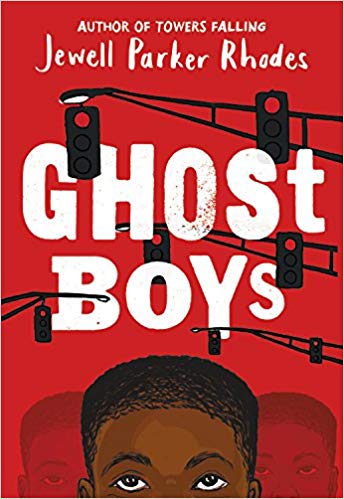
Did you hear that? The little whisper? It might have been Jerome, a twelve year old boy who was shot and killed by a policeman. Now forced to observe his family deal with his death, Jerome is uncertain of his purpose as a ghost until he meets Emmett Till, another ghost boy who draws on his previous experiences to offer insight on what is happening throughout his trial. Jerome struggles to understand why he and his family are not receiving justice. The eyes of Sarah, the daughter of the charged police officer, are gradually opened to how racism plays a part in her world, and through talking with Jerome, she begins to sympathize with the terrible misfortune that happened to him. She seeks out ways to help Jerome receive his well-deserved justice and bring awareness to the pressing stereotypes that are shutting minorities out.
—Jewell Parker Rhodes, Ghost Boys
“Ghost boys stick together… Until skin color doesn’t matter. Only friendship. Kindness. Understanding.”
Why should I read this?
For decades, skin color has been a problem that refuses to go away despite the many courageous acts of minorities who attempt to aid it. For those who are killed unfairly and cannot live to fight for their own justice, people have banded together to give voice to the voiceless. In this way, there is hope for future generations that racism and stereotypes can gradually be weeded out until they no longer affect society in such a negative manner. Since the stigma that African Americans are threatening and/or dangerous is still very prevalent, they are pulled out from a crowd merely because their skin tone is a little darker than the rest. The world needs to work on being more understanding and concentrate on looking beyond the skin. You cannot label people based off of your preconceived notions on what they might be like because of their skin color; instead, focus on what kind of person is there beyond the surface level—I’ll bet you will be surprised with what you find.
Overall review



⅗ bookmarks—This book incorporated a unique perspective by having the protagonist be a ghost who observes his family following his death in addition to the trial to determine if the officer was guilty. The author frequently alternated chapters between the “dead” perspective of Jerome and the “alive” perspective; therefore, there was a small amount of suspense that was present throughout the novel. This book felt like a watered down version of The Hate U Give. The author sometimes included seemingly pointless paragraph interjections that interrupted the story line, but it was a good read overall.
Outside reviews
In-depth summary of Ghost Boys – This blog post does a thorough analysis and summary of the book; it gives plenty of detail without any spoilers.
Kirkus review – Short and sweet, this review of Ghost Boys touches on how it relates to the civil rights movement and what can be done to improve the future in regard to police brutality.
 Han's Book Nook